


To form a Connecticut corporation, you generally file a certificate of incorporation with the Connecticut Office of the Secretary of the State, appoint a registered agent, complete the Organization and First Report, and establish the corporation's internal governance. The filing requirements differ for stock and non-stock corporations, so it’s important to go into the process prepared and knowledgeable if you want to avoid delays and errors.
Key takeaways
- Most for-profit businesses form a domestic stock corporation and file a certificate of incorporation through Business.CT.gov.
- A domestic stock corporation currently pays a $250 certificate of incorporation fee and a $150 Organization and First Report fee, for $400 in required state filing fees during the initial formation period.
- The Organization and First Report is due within 90 days after formation. Later annual reports are due on the anniversary of the First Report's filing date and cost $150 for a domestic stock corporation.
- After formation, appoint directors and officers, adopt bylaws, authorize and issue shares, obtain an EIN, and create a corporate records system.
- C corporation and S corporation status are federal tax classifications, not Connecticut entity types. An eligible corporation elects S corporation treatment after formation.

How to start a corporation in Connecticut: 9 steps
Connecticut’s formation process follows a specific sequence, and some steps need to happen before the state filing while others come after approval. Working through them in order can help you avoid delays and keep the corporation properly documented from the start.
Step 1: Choose a name that meets Connecticut's corporate naming rules
Your corporate name generally must include "Corporation," "Incorporated," "Company," "Limited," an accepted abbreviation such as "Corp.," "Inc.," "Co.," or "Ltd.," or another equivalent term permitted by Connecticut law. It must also be distinguishable from every other entity already on file with the Connecticut Office of the Secretary of the State.
- The name can't imply a purpose the corporation isn't authorized to pursue.
- The name can't state or imply that the corporation is organized for a purpose other than a lawful purpose permitted by its certificate of incorporation.
- Restricted terms like "bank," "insurance," or "trust" may require prior authorization from the relevant state agency.
Search for name availability using the Business Records Search tool at Business.CT.gov before you file, or use LegalZoom’s free name search tool below. A name conflict can cause the state to reject a certificate of incorporation, so check availability in advance to prevent an avoidable delay.
Free Connecticut Business Name Check
Starting a business? Use our free name check tool to check your business name against the Connecticut Secretary of the State records.
By clicking "Check Availability," I agree to LegalZoom's Terms of Use. This search is a preliminary check of state databases and does not include variations or trademarks. Results do not guarantee name availability or compliance with legal requirements.
Optionally, you can reserve a name before filing if you want to keep it as a placeholder while you gather your paperwork. There is a $60 fee. For a deeper dive, check out our comprehensive guide to Connecticut business names.
Step 2: Appoint a Connecticut registered agent
A registered agent receives official legal notices and government correspondence on your corporation's behalf. Connecticut requires your registered agent to maintain the required physical street address in the state; a P.O. box alone doesn't qualify.
As a practical matter, the agent should generally be available at that address during normal business hours. If the agent is a natural person, they must be at least 18 years old and a Connecticut resident. You can also appoint a business entity authorized to conduct business in Connecticut. Failing to maintain a registered agent puts your corporation's good standing at risk.
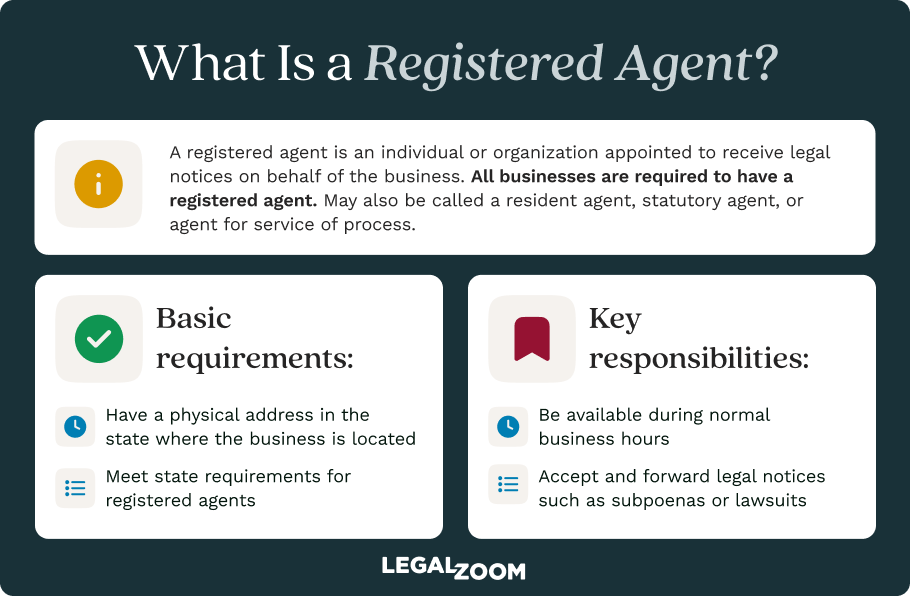
LegalZoom can serve as your registered agent. For a full breakdown of who qualifies and what the role requires, see LegalZoom's guide to Connecticut registered agent rules.
Step 3: Decide whether you are forming a stock or non-stock corporation
Connecticut requires you to choose between a domestic stock corporation and a domestic non-stock corporation before you file, because each uses a different certificate of incorporation form. Most for-profit businesses form a stock corporation, which issues shares of ownership to shareholders. Non-stock corporations, used primarily for nonprofits and membership organizations, don't issue shares.
| Corporation type | Who uses it | Issues shares? | Typical use case |
|---|---|---|---|
| Domestic stock corporation | For-profit businesses | Yes | Startups, small businesses, companies seeking outside investment |
| Domestic non-stock corporation | Nonprofits and membership organizations | No | Charitable organizations, trade associations, civic groups |
Step 4: Determine your initial directors and share structure
Before filing, decide who will serve as the initial directors and how many shares the corporation will be authorized to issue. The incorporator may appoint the initial directors if they are not named through another permitted formation action. For a stock corporation, also decide whether to authorize one class of common stock or a more complex share structure. Multiple classes or preferred-share rights may warrant legal review.
Step 5: File the Connecticut certificate of incorporation with the Secretary of the State
The certificate of incorporation legally creates your Connecticut corporation. A domestic stock corporation currently pays a $250 filing fee. File online through Business.CT.gov or use an eligible paper filing method.
After the state accepts the certificate of incorporation, complete the separate Organization and First Report described in the next step.
The certificate of incorporation requires your corporate name, registered agent information, authorized share structure, corporation email address, NAICS code, and incorporator information. Connecticut offers expedited service for eligible online filings for an additional $50, but not for paper forms submitted by mail.
Step 6: File the Organization and First Report
You must file the Organization and First Report within 90 days after the certificate of incorporation is filed. For a domestic stock corporation, the current fee is $150. The report records the corporation's officers, directors, registered agent, addresses, email address, and NAICS code. Its filing date establishes the anniversary date for subsequent annual reports.
Step 7: Hold the organizational meeting, adopt bylaws, and issue shares
Once the state approves the certificate of incorporation and the initial directors are in place, the incorporator or board should complete the organizational actions that allow the corporation to operate. The board typically adopts the bylaws, appoints officers, approves the corporation's bank account, and authorizes the initial issuance of shares.
Note: Connecticut requires corporations to adopt bylaws per Conn. Gen. Stat. § 33-640 for stock corporations and Conn. Gen. Stat. § 33-1030.
Connecticut doesn't prescribe a mandatory form, but well-drafted bylaws should address:
- The number of directors and the procedure for electing, removing, and replacing them
- The titles, duties, and authority of the corporation's officers. Connecticut doesn't prescribe a standard set of officer titles, although the corporation must assign responsibility for maintaining and authenticating required records.
- How and when annual and special meetings of the board and shareholders are called, noticed, and conducted
- Quorum requirements for board and shareholder votes
- How shares of stock are issued and transferred
- The process for amending the bylaws themselves
The board also must approve the number and class of shares to issue, the consideration each shareholder provides, and the form of any stock certificates. Record every issuance in a stock ledger that identifies the shareholder, number and class of shares, consideration paid, and issuance date. Authorized shares are the maximum the corporation may issue; they are not automatically issued when the certificate of incorporation is filed. Securities laws may apply even when a private corporation issues shares to only a few founders.
You don't need to file your bylaws with the state, but you must keep a copy in your corporate record book along with your meeting minutes and other corporate records.
Note: Connecticut law requires stock corporations and nonstock corporations to keep meeting minutes on file in their principal office.
Step 8: Get a federal EIN and register for Connecticut taxes
Your Connecticut corporation needs a federal employer identification number (EIN), a nine-digit tax ID the IRS issues at no cost. An EIN is necessary to open a bank account, pay employees, and file taxes. Apply directly through IRS.gov.
Connecticut corporations may need to register with the Connecticut Department of Revenue Services through myconneCT for corporation business tax, sales and use tax, employer withholding, or other applicable accounts. Whether the business remains a C corporation or elects S corporation status is a separate federal tax decision made after formation and does not change the Connecticut certificate of incorporation.
Step 9: Open a business bank account and obtain required licenses
A dedicated business bank account keeps your personal and corporate finances separate, reinforcing the liability protection your corporation provides. You'll typically need your certificate of incorporation, EIN, and bylaws to open one.
Connecticut doesn't require a statewide general business license, but municipalities may require local licenses, permits, zoning approvals, or registrations. The Connecticut Department of Consumer Protection regulates specific professions and activities, including accounting, real estate, home improvement, new-home construction, and certain skilled trades. Check with the appropriate state licensing authority and your local municipality before you begin operating.
What the Connecticut certificate of incorporation requires
Every field matters. Leaving a section incomplete, using a non-compliant corporate name, or submitting the wrong form are among the most common reasons the Connecticut Office of the Secretary of the State rejects a filing.
- Corporate name. Must include one of the required designators: "corporation," "incorporated," "company," or "limited," or their abbreviations "corp.," "inc.," "co.," or "ltd."
- Total number of authorized shares. The total number of shares the corporation is authorized to issue. At least one share must be authorized. If you plan to issue more than one class of shares, designate each class and the number of shares authorized within it. Connecticut doesn't require you to state a par value.
- Terms, limitations, and rights of each share class. If you authorize more than one class, describe the rights and limitations of each. For most first-time founders issuing a single class of common stock, this section is straightforward. Multi-class structures (typically used when bringing on investors who want preferred stock) are worth reviewing with an attorney before you file.
- Corporation email address. The Secretary of the State uses this address to notify your entity when its annual report is due. Use an email address you check regularly and that will remain active over time.
- NAICS code. A standardized business classification code you can look up at the U.S. Census Bureau's NAICS website. If your business spans multiple activities, select the code that best represents your primary operation.
- Registered agent appointment. The registered agent's full name and physical Connecticut street address. The agent must be either a Connecticut resident individual or a business entity authorized to conduct business in Connecticut.
- Incorporator name and address. The incorporator's name and mailing address, where the state will send confirmation of your filing. The incorporator doesn't need to be a director, officer, or shareholder. Many founders serve as their own incorporator, but an attorney or agent may also fill this role.
- Incorporator signature. Every individual listed as an incorporator must sign. A missing signature can cause an otherwise complete filing to be returned.
The Organization and First Report is a separate form that must be filed within 90 days of the certificate of incorporation's filing date. It records the names, titles, and addresses of your corporation's officers and directors. Missing it puts your corporation out of compliance even if your initial formation was successful.
Common filing mistakes to avoid
Small errors on the certificate of incorporation can delay approval or force you to resubmit the filing. A final review before submission can help you catch preventable issues while they are still easy to fix.
- Using outdated instructions or paper forms. Confirm the current filing method and requirements at Business.CT.gov before submitting.
- Leaving required fields blank or providing inconsistent information across fields
- Submitting a corporate name that's already taken. Run your name search before you file.
- Including an incorrect or incomplete registered agent address
- Submitting the wrong filing fee. Verify the current fee at Business.CT.gov before you submit.
- Forgetting to have every listed incorporator sign the certificate
Connecticut corporation filing fees, processing options, and where to file
A domestic stock corporation currently pays $250 to file the certificate of incorporation and $150 to file the Organization and First Report within 90 days. Subsequent annual reports cost $150. Domestic non-stock corporations generally pay lower filing and reporting fees. Fees can change, so verify current amounts at Business.CT.gov before submitting.
| Filing type | Fee | Filing method | Processing time |
|---|---|---|---|
| Certificate of incorporation (stock corporation) |
$250 | Online or eligible paper filing | Standard processing varies |
| Expedited processing (24-hour) |
+$50 | Eligible online filings only | 1 business day |
| Name reservation (optional) |
$60 | Online or eligible paper filing | N/A |
| Organization and First Report (domestic stock corporation) |
$150 | Online only | Due within 90 days after formation |
Where to file
- Online: File through Business.CT.gov. You'll need a ct.gov account to submit forms electronically.
- By mail: Send your completed certificate of incorporation and filing fee to the Commercial Recording Division of the Connecticut Office of the Secretary of the State.
- In person: Deliver documents directly to the Commercial Recording Division in Hartford. Verify the current office address at Business.CT.gov before making the trip.
Processing times
Standard processing times vary with filing volume. Connecticut offers expedited processing for eligible online filings for an additional $50. Expedited service is not available for paper forms submitted by mail. Check Business.CT.gov for current processing information before filing.
Connecticut corporation annual report and ongoing compliance requirements
Forming the corporation is only the beginning of its relationship with the state. Staying compliant requires ongoing filings, accurate records, and timely updates when key business information changes.
Corporate records
Connecticut law requires both stock corporations and nonstock corporations to keep corporate records of the following items:
- Meeting minutes for directors’ and shareholders’/members’ meetings
- Actions taken by directors outside of meetings
- Actions taken by committees on behalf of the directors
- Accounting records
- A record of names and addresses of all shareholders or members and the number and class of shares or votes they have
- Certificate of incorporation
- All amendments to the certificate currently in effect
- Bylaws and all amendments to them currently in effect
- Resolutions adopted by the board of directors
- All written communications to shareholders within the past three years
- Financial statements for the past three years
- Names and business addresses of its current directors and officers
- Most recent annual report
Annual reporting
The Connecticut annual report is a mandatory filing for all domestic and foreign corporations. It confirms or updates your officers, directors, registered agent, and principal office address on file with the state. Even if nothing has changed, you still have to file.
The annual report filing fee for a Connecticut domestic stock corporation is $150, filed online at Business.CT.gov. LegalZoom can also file your annual report for you as part of our compliance management services.
A corporation formed on or after January 1, 2020, files its Organization and First Report within 90 days after the certificate of incorporation. Subsequent annual reports are due each year on the anniversary of the First Report's filing date. Check the corporation's Business.CT.gov record for its exact due date.
What happens if you miss the annual report deadline?
Missing this deadline puts your corporation in default. Connecticut doesn't charge a direct late fee from the Secretary of the State, but the entity can be administratively dissolved after one year of non-filing.
The consequences compound quickly:
- Loss of good standing, affecting financing, contracts, and the ability to expand or dissolve properly
- Your entity's name may become available for others to use
- After administrative dissolution, the corporation continues to exist but generally may conduct only activities necessary to wind up and liquidate its affairs. Dissolution can also disrupt contracts, financing, banking relationships, and other business operations
- Once the one-year threshold is met, the Secretary of the State sends a Notice of Intent to Dissolve by email to the address on file; entities then have three months to file all past-due reports and avoid dissolution
Reinstatement requires filing all delinquent reports and paying a reinstatement fee. For a deeper look, see LegalZoom's guide to the Connecticut annual report for corporations. If dissolution becomes a consideration, understanding the business dissolution rules around dissolving a Connecticut corporation in advance will save significant time and expense.
Your Connecticut corporation compliance checklist
- Hold your organizational meeting soon after forming to adopt bylaws, elect officers, and authorize initial corporate actions
- File the Organization and First Report within 90 days, then file subsequent annual reports by the anniversary of the First Report's filing date
- Maintain a registered agent with a current physical Connecticut street address. Update immediately if your agent changes.
- Keep corporate records current, including bylaws, meeting minutes, officer and director information, and stock records
- Hold required shareholder meetings or take permitted action by written consent, and document board and shareholder decisions appropriately
- Register with the Connecticut Department of Revenue Services and file required state returns each year
- Renew any industry-specific licenses or permits required by the Connecticut Department of Consumer Protection or your local municipality
- Update your registered agent or principal office address with the Secretary of the State whenever that information changes
Connecticut corporation vs. LLC: Which is right for your business?
Both structures provide limited liability protection. The differences come down to structure, taxation, and long-term goals.
A Connecticut corporation must adopt bylaws, appoint a board of directors, and authorize a share structure; it may then issue shares as approved through the corporation's organizational actions. That formal structure may be a good fit if you plan to raise outside investment, grant equity to employees, or build toward an acquisition. The annual report fee for a domestic stock corporation is currently $150 per year.
A Connecticut LLC has fewer ongoing formality requirements, defaults to pass-through taxation, and carries an $80 annual report fee and a $120 certificate of organization filing fee. Both entity types file annual reports, but a corporation's due date is tied to the anniversary of its first report, while a Connecticut LLC files its report annually between January 1 and March 31.
Choose a corporation if equity structure and outside investment are priorities. Choose an LLC if simplicity and lower compliance overhead matter more. LegalZoom's guide to forming an LLC in Connecticut walks through that process in full.
Start your Connecticut corporation with LegalZoom
Filing the Connecticut certificate of incorporation correctly the first time matters. A rejected filing means lost time and wasted fees. LegalZoom has been helping business owners work through the formation process for more than 25 years.
Here's what LegalZoom can handle for you:
- Corporation formation filing. LegalZoom can prepare and submit your Connecticut certificate of incorporation, so you don't have to navigate the system on your own or risk common filing mistakes.
- Registered agent service. Our Greenwood Village-based registered agent service can help you maintain the registered agent requirement and reduce the risk of compliance problems caused by a lapse in coverage.
- Ongoing compliance support. From tracking your annual report deadline to managing changes to your registered agent or corporate address, LegalZoom's compliance tools help you stay on top of post-formation obligations.
If your situation involves complex shareholder agreements, a multi-class stock structure, or professional corporation questions, LegalZoom can connect you with a Connecticut-licensed attorney.
Connecticut corporation FAQs
How long does it take to incorporate in Connecticut?
Standard processing times vary with filing volume. Connecticut offers expedited processing for eligible online filings for an additional $50, but expedited service is not available for paper forms submitted by mail. Check Business.CT.gov for current turnaround information.
What is the difference between a C corporation and an S corporation in Connecticut?
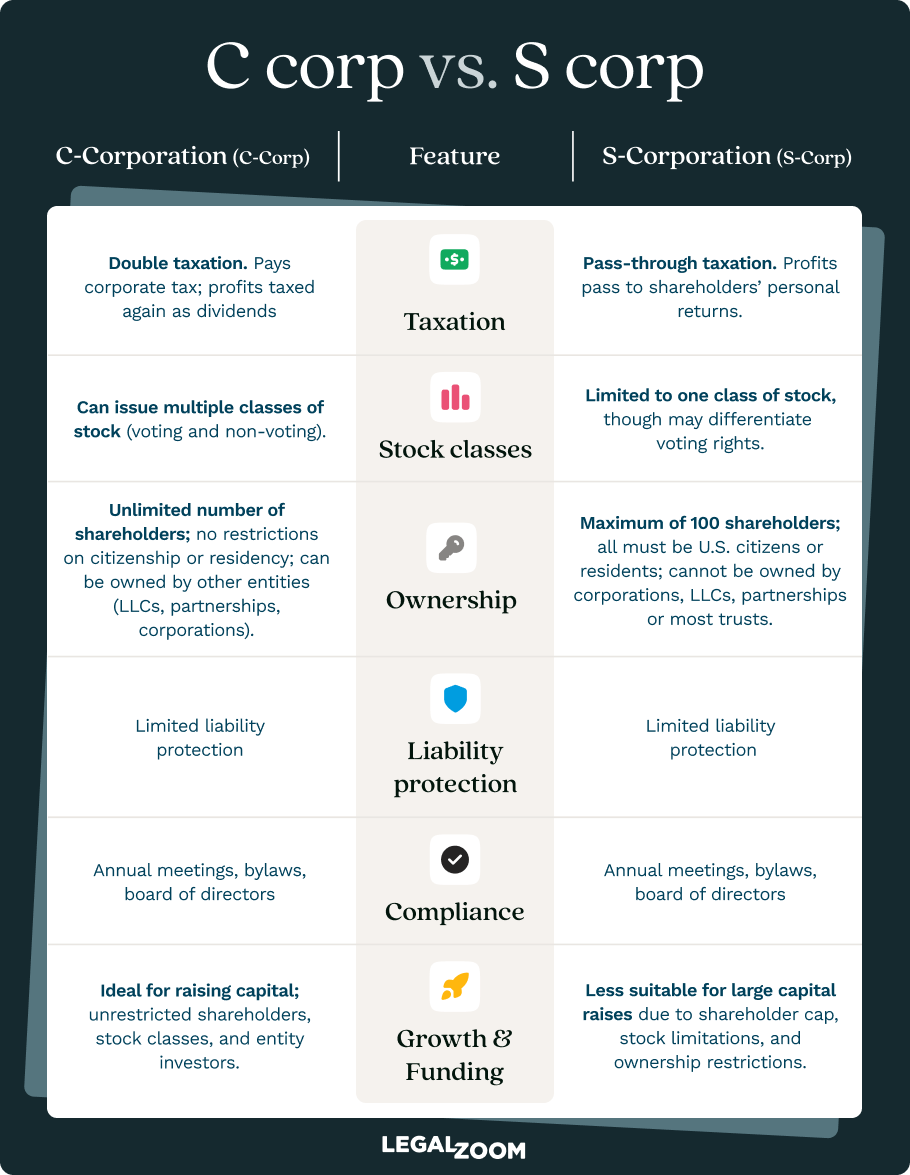
A Connecticut corporation is generally taxed under the federal C corporation rules unless it qualifies for and makes a timely S corporation election. Under C corporation treatment, the corporation generally pays federal income tax on its profits, and shareholders may owe personal income tax on dividends. An S corporation isn't a separate legal structure; it's a federal tax election filed with the IRS. S corporation income generally passes through to shareholders for federal income tax purposes, although federal and Connecticut entity-level taxes, elections, and filing obligations may still apply. Connecticut doesn't require you to indicate your intended tax status on the certificate of incorporation. Consult a tax professional before making the S election.
Can I be my own registered agent for my Connecticut corporation?
Yes, but your business entity itself can't serve as its own registered agent. Whoever you designate must be at least 18 years old, a Connecticut resident, and maintain a physical street address (not a P.O. box) in the state. Being your own registered agent is legal but rarely practical: you'd need to be present at a Connecticut address during normal business hours to receive legal documents.
Do I need a lawyer to form a Connecticut corporation?
No. The process is open to any individual who completes the required forms and pays the applicable fees through Business.CT.gov. Due to the scrutiny on corporations and the strict compliance requirements, it’s wise to work with a professional or alongside legal counsel, especially if it’s your first time forming a corporation, or if your corporation will have multiple shareholders, a multi-class stock structure, complex ownership agreements, or professional licensing considerations.
How much does it cost to incorporate in CT?
A domestic stock corporation currently pays $250 for the certificate of incorporation and $150 for the Organization and First Report, for $400 in required state filing fees during the initial formation period. Subsequent annual reports cost $150. Optional costs include a $60 name reservation and a $50 expedited-service fee for eligible online filings.
'%20/%3e%3c/svg%3e)

'%3e%3cpath%20fill-rule='evenodd'%20clip-rule='evenodd'%20d='M9.31239%2025.5316H13.0679V14.1032H9.31239V25.5316ZM11.1913%208.46875C9.93945%208.46875%209%209.25086%209%2010.505C9%2011.5995%209.78211%2012.5389%2011.1913%2012.5389C12.6005%2012.5389%2013.3826%2011.5995%2013.3826%2010.505C13.3826%209.4082%2012.6005%208.46875%2011.1913%208.46875ZM27%2018.9577V25.5316H23.2445V19.4275C23.2445%2017.8609%2022.6174%2016.7664%2021.3679%2016.7664C20.2711%2016.7664%2019.644%2017.5463%2019.3316%2018.1756C19.1743%2018.488%2019.1743%2018.8004%2019.1743%2019.1128V25.5316H15.4165V13.9458H19.1743V15.5123C19.644%2014.7302%2020.5835%2013.6357%2022.6174%2013.6357C25.1234%2013.7908%2027%2015.3573%2027%2018.9577Z'%20fill='white'/%3e%3c/g%3e%3cdefs%3e%3cclipPath%20id='clip0_952_9489'%3e%3crect%20width='18'%20height='18'%20fill='white'%20transform='translate(9%208)'/%3e%3c/clipPath%3e%3c/defs%3e%3c/svg%3e)