.
.





To form an LLC in Pennsylvania, file a certificate of organization and a docketing statement with the Department of State. The state filing fee is $125. The steps below explain how to choose a registered office, complete the filing, and check which ongoing tax and licensing rules apply to your business.
Key takeaways
- Pennsylvania LLCs are formed by filing a certificate of organization and a docketing statement with the Pennsylvania Department of State for a $125 filing fee.
- Pennsylvania LLCs need a registered office in the state. You can list a Pennsylvania street address or use a Commercial Registered Office Provider (CROP) where allowed.
- File the annual report each year from January 1 through September 30, starting in the calendar year after formation; the fee is $7 for a for-profit LLC and $0 for an LLC with a not-for-profit purpose. The Department of State explains how Pennsylvania overhauled its annual reporting rules.
- Processing times vary. Check the Department of State's current filing information, and treat posted times as estimates, not guarantees.
- Check which tax registrations apply, including an EIN or employer accounts, based on the LLC's classification, hiring, and activities.
- Check professional, industry, employer, and local license requirements for the actual business and location.
Step 1: Check Pennsylvania LLC name availability
Start with a search of Pennsylvania's business entity database. Check the exact name and close variations before you file. State name availability isn't the same as trademark clearance. Search as many names as you want with LegalZoom's free business name search tool.
Free Pennsylvania Business Name Check
Starting a business? Use our free name check tool to check your business name against Pennsylvania Department of State records.
By clicking "Check Availability," I agree to LegalZoom's Terms of Use. This search is a preliminary check of state databases and does not include variations or trademarks. Results do not guarantee name availability or compliance with legal requirements.
What naming rules apply to a Pennsylvania LLC?
Pennsylvania requires an LLC name to be distinguishable from names already on file and to include an approved designator. A name may use "company," "limited," or "limited liability company," or an abbreviation or term of like import, such as LLC, L.L.C., LC, L.C., or Ltd.
Some words, such as "bank," "trust," "insurance," or "university," may require agency approval or additional evidence. Words connected to licensed professions can also trigger review.
State acceptance doesn't establish trademark rights or clear a name for every brand use, so run a trademark search to ensure you don’t encroach on protected names.
Can I reserve an LLC name in Pennsylvania before I file?
You can reserve a Pennsylvania LLC name with Form DSCB:15-208 for $70. The reservation lasts 120 days and can't be renewed. If you plan to file soon, you do not need to reserve the name.
Step 2: Choose a registered office for your Pennsylvania LLC
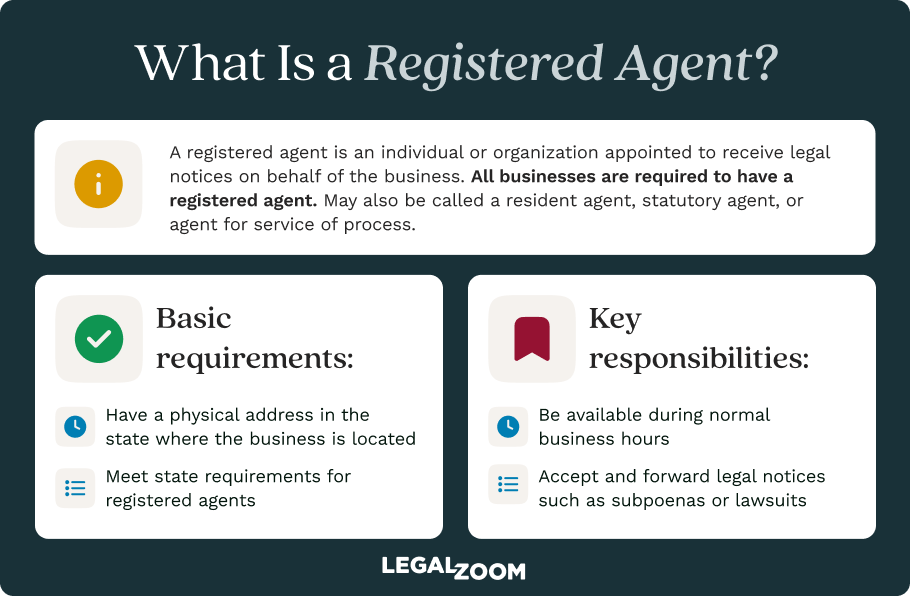
Pennsylvania requires every LLC to maintain a registered office in the state. You can list a Pennsylvania street address or, where allowed, a Commercial Registered Office Provider (CROP) in its place. A home address listed with the state may appear in public records, but using a CROP doesn’t make all LLC information private.
Do you need a registered office or registered agent for a Pennsylvania LLC?
Yes. Every Pennsylvania LLC must maintain a registered office, whether it has one member or several. The filing may list a Pennsylvania street address or, where permitted, an eligible CROP's name instead. Keep the registered office information current so legal notices can reach the LLC.
Want to change it later? File a Statement of Change of Registered Office (Form DSCB:15-1507/5507/8625/8825) with the Department of State for $5.
How is a Pennsylvania registered office different from a registered agent in other states?
Many states require a named registered agent. Pennsylvania instead requires a registered office and allows an eligible CROP's name to be listed in place of the address. If you use your own office, enter its street address; if you use a provider, follow the state's CROP filing instructions.
Can I use my home address as my Pennsylvania registered office?
You can use your Pennsylvania home street address as the registered office, but it may appear in public business records. A P.O. box alone doesn't meet the street-address requirement. If you use a CROP, the provider's name may be listed instead, which can help privacy concerns, but it doesn't guarantee your information will be private in every business record.
Step 3: File the certificate of organization and docketing statement
To form a Pennsylvania LLC, file both the Certificate of Organization (DSCB:15-8821) and New Entity Docketing Statement (DSCB:15-134A) with the Department of State. The state filing fee is $125. The docketing statement collects administrative and tax-related information, but it doesn’t replace registering for tax accounts required by your business activities.
What is a certificate of organization in Pennsylvania?
This document legally creates your LLC. It asks for:
- Your LLC's name, including the required designator
- Your registered office address, or your CROP's name if applicable
- The name of each organizer (Pennsylvania no longer requires organizer addresses)
- Whether the LLC will render a restricted professional service, and if so, which licensed service
- The effective date: filing date or a specified future date
- Organizer signatures
What is a docketing statement for a Pennsylvania LLC?
This form collects administrative and tax-related information that the Department of Revenue and other agencies receive. It asks for:
- Your LLC's name
- A brief description of your business
- Your federal employer identification number (EIN), if you already have one
- Your fiscal year-end date
- The tax responsible party's name and mailing address
A specific business description helps state agencies understand what your LLC does. The docketing statement does not register the LLC for every tax account that may apply, so use Pennsylvania Online Business Tax Registration in myPATH to check activity-based requirements.
How do you file a certificate of organization in Pennsylvania?
Online filing is available through the Business Filing Services portal. Check the Department of State's current filing information before you submit.
There is a $125 state filing fee. Processing times vary, so check the Department of State's current filing information and treat posted times as estimates, not guarantees.
When does a delayed effective date make sense for a Pennsylvania LLC filing?
Your LLC is formed when its certificate of organization becomes effective. Pennsylvania allows a specified delayed effective date, but it must be after the certificate is delivered to the Department and cannot be retroactive. Until the effective date arrives, the LLC hasn't been formed, so coordinate contracts, banking, and licenses accordingly.
Step 4: Create an operating agreement for your Pennsylvania LLC
Pennsylvania doesn’t require you to file an operating agreement. But, without written terms, state default rules may govern how the LLC is managed and how interim distributions are made. If members want a different arrangement, put it in writing.
Do you need an operating agreement for a Pennsylvania LLC?
Pennsylvania law doesn't require an LLC to adopt a written agreement. A written agreement can help members spell out ownership, decision-making, departures, and distributions. Don't assume interim distributions follow each person's contributions: The statute's default is equal shares unless the governing terms provide otherwise. Distribution rules aren't the same as tax allocations.
Should a Pennsylvania LLC be member-managed or manager-managed?
In a member-managed LLC, members make management decisions. In a manager-managed LLC, members appoint one or more managers, who may or may not be members. Unless the operating agreement says otherwise, Pennsylvania defaults to member management, with equal management rights among members.
Single-member vs. multi-member LLC in Pennsylvania: What's different?
Both types follow the same formation process: Each requires a certificate of organization, a $125 fee, and a registered office. They differ in tax treatment and the role of the operating agreement.
For federal tax purposes, the IRS generally treats a single-member LLC as a disregarded entity and a multi-member LLC as a partnership unless the LLC elects a different classification. Pennsylvania tax obligations depend on the LLC's tax classification and activities. See the state tax section below for current rates.
A single-member operating agreement can record how you intend to run the LLC, but it doesn't guarantee liability protection. If the LLC has multiple members, the agreement can address distributions, voting, authority, transfers, and what happens when a member leaves.
Step 5: Get an EIN for your Pennsylvania LLC
Once your certificate of organization is effective, you can apply for a federal employer identification number, or EIN, which is the nine-digit ID the IRS uses to track your LLC's taxes. You can apply for an EIN directly with the IRS or let LegalZoom file the application on your behalf.
An LLC needs an EIN if it has employees, is taxed as a partnership or corporation, or is otherwise required to have one under federal law. A single-member LLC with no employees and no other EIN requirement may not need one for federal tax reporting. Banks and particular registrations may have their own requirements, so check before applying.
Do all Pennsylvania LLCs need an EIN?
An EIN is required in some situations, including when an LLC has employees or files as a partnership or corporation. A single-member LLC with no employees may be able to use its owner's SSN for federal tax reporting if no other EIN requirement applies. A bank may still require an EIN to open an account.
Step 6: Open a business bank account for your Pennsylvania LLC
A separate account for LLC activity keeps business and personal transactions distinct and makes records easier to follow. It isn’t a Pennsylvania formation requirement, and having an account doesn’t guarantee liability protection. Banks set their own documentation and EIN requirements, so ask what yours requires.
Why should a Pennsylvania LLC have a separate business bank account?
Keeping business and personal transactions separate makes your records easier to follow and can help show that your LLC operates separately. Commingling may be one factor in a liability dispute, but a separate account alone doesn't guarantee liability protection.
What might a bank ask for to open an LLC account?
Banks are free to set their own requirements, but many ask for the following information.
- Your accepted certificate of organization or state filing confirmation
- An EIN confirmation letter, if you have one
- Your operating agreement or a banking resolution, if requested
- Government-issued identification for each person the bank asks to verify
- Your LLC's registered office and principal office information, if requested
Banks set their own requirements, so ask before opening the account. A multi-member LLC may need a resolution that identifies who can manage the account.
Step 7: Register for Pennsylvania state taxes
Pennsylvania tax registration depends on how the LLC is taxed and what it does. Use Pennsylvania Online Business Tax Registration in myPATH to register for applicable accounts, such as sales tax or employer withholding. Filing formation documents doesn’t complete every activity-based tax registration.
Building a business is enough work as it is. We'll help you start your LLC with confidence.

Does a Pennsylvania LLC need to register with the Department of Revenue?
It depends on the LLC's activities. Use Pennsylvania Online Business Tax Registration in myPATH to set up the tax accounts that apply, such as sales tax or employer withholding. If you hire employees, check any additional employer registration and workers' compensation requirements with the appropriate state agencies.
What state taxes apply to Pennsylvania LLCs?
For Pennsylvania personal income tax, the current flat rate is 3.07%. An LLC taxed as a C corporation may owe Pennsylvania's Corporate Net Income Tax—thatrate is 7.49%, with a scheduled decrease to 4.99% by 2031.
If you sell taxable goods or services, check whether you must register and collect Pennsylvania's 6% state sales tax. Local rates add 2% in Philadelphia and 1% in Allegheny County. Employers must withhold Pennsylvania income tax from employee compensation at the applicable rate.
Step 8: Pennsylvania business licenses and local permit requirements
Forming an LLC doesn’t authorize every business activity. Requirements may depend on the profession, products or services, employees, and location, and may come from state agencies as well as county or city governments. Check the rules for your business and location before beginning regulated work.
What Pennsylvania business licenses might my LLC need?
Pennsylvania has no single statewide business license; requirements depend on your industry, county, and city. The licenses you need depend on your business and industry. You may need:
- Professional licenses for regulated fields, such as medicine, law, accounting, engineering, cosmetology, and real estate
- Sales tax registration through myPATH, when required for taxable sales
- Municipal business licenses, taxes, and permits that apply to the activity and location
- Health, safety, and building permits for restaurants, salons, contractors, and similar businesses
- Zoning or occupancy approval for the business location, including a home business, when required
Does Pennsylvania allow specialized LLCs?
Pennsylvania also recognizes two specialized LLC categories:
- Restricted professional companies (RPCs). An LLC that provides a restricted professional service must identify that status on its certificate of organization and follow applicable licensing and ownership rules. RPCs file a separate certificate of annual registration and pay a fee based on qualifying members, as explained below.
- Benefit companies. An LLC may organize as a benefit company and pursue a stated public benefit alongside profit. In addition to the standard annual report, a benefit company must prepare an annual benefit report and deliver it to members within 120 days after the end of its fiscal year, or with any other annual report to members. It must file a copy with the Department of State at the same time and post the report on its public website if it has one. The filing fee is $70.
Do counties or cities in Pennsylvania require additional permits?
License and tax requirements depend on where and how the LLC operates. Businesses operating in Philadelphia generally need the city's free commercial activity license. A Philadelphia business generally must file a Business Income and Receipts Tax (BIRT) return even if it has no profit. An active Commercial Activity License (CAL) can also carry a BIRT filing obligation, even when the business has no activity. The former $100,000 exemption has been eliminated.
A business located outside Philadelphia may also need to file if it meets the city's economic-nexus threshold—generally $100,000 in Philadelphia gross receipts during any 12-month period. Pittsburgh has activity-specific business license requirements. Check the city's current licensing guidance rather than relying on a generalized description of business privilege or mercantile tax. Also check the county and municipality where the business operates.
Pennsylvania LLC annual report requirements
Pennsylvania requires most LLCs to file an annual report. Restricted professional companies and benefit companies have additional filing requirements. The sections below explain the standard report's deadline and fees, along with the separate requirements for those entity types.
When is the Pennsylvania LLC annual report due?
Pennsylvania LLC annual reports are filed each year from January 1 through September 30, beginning in the calendar year after formation. The standard fee is $7 for a for-profit LLC and $0 for an LLC with a not-for-profit purpose. Reports include the entity's name, jurisdiction, registered and principal office addresses, at least one governor, officers if any, and entity number; confirm your specific due date with the Department of State. Check its instructions before filing.
What happens if I miss my Pennsylvania annual report deadline?
A missed report doesn't cause immediate administrative dissolution. The Department of State says enforcement for missed annual reports begins with reports due in 2027, six months after the applicable deadline. Reinstatement costs $35 electronically or $40 on paper, plus $15 for each unpaid annual report.
Pennsylvania LLC filing fees and cost breakdown
The $125 formation fee is the main required state cost. Name reservations, expedited processing, registered-office changes, and filings for special LLC types may add state fees. CROP and formation-service costs vary by provider. Tax and license requirements depend on the business' activities.
| Fee type | Cost | When it's due |
|---|---|---|
| Certificate of organization (mandatory) | $125 | One-time, at filing |
| Annual report | For-profit: $7; not-for-profit purpose: $0 | Each year, by September 30 |
| Name reservation (optional) | $70 | Before filing, for a 120-day hold |
| Statement of Change of Registered Office (optional/as-needed) | $5 | Whenever your address changes |
| Certificate of Annual Registration for RPCs (mandatory for RPCs) | $700 per qualifying member under current DOS rules | Each year, by April 15 |
| Expedited service (same-day, three-hour, or one-hour) | Add $100 / $300 / $1,000, respectively | Online through Business Filing Services or in person—not by mail. Check current cutoffs. |
| Benefit company report | $70 | Annual, separate from the standard report |
As they can change at any time, check fees against the Department of State's current fee schedule before filing. CROP and other provider costs vary, so confirm them with the provider.
The risks of filing a Pennsylvania LLC yourself
While you can file an LLC on your own in Pennsylvania, doing so can increase the chances of setbacks, mistakes, and delays that could keep you from opening your doors. These are a few DIY risks you’ll want to be aware of before you file your LLC with the state:
- Overlooking a required formation document. Pennsylvania requires both a certificate of organization and a new entity docketing statement. The docketing statement also doesn’t register the LLC for every tax account its activities may require.
- Unexpected registered-office disclosure. A home street address used as the registered office may appear in public records. A CROP may let you list the provider instead, where allowed, but it doesn’t make all LLC information private.
- Leaving member terms to default rules. Without different written terms, Pennsylvania’s defaults provide equal management rights and equal interim distributions. Those rules may not match what the members expect.
- Mixing personal and LLC finances. Commingling may be one factor in a liability dispute; a separate account alone doesn’t guarantee liability protection.
- Missing ongoing requirements. The standard annual report and separate RPC and benefit-company filings are distinct obligations. Missing an RPC filing can trigger a lien and penalty; tax and licensing requirements also depend on the business’ activities and location.
Start your Pennsylvania LLC with LegalZoom
For Pennsylvania LLCs, LegalZoom can check your business name and prepare and file your certificate of organization and new entity docketing statement. Its registered office service can help keep your home address off the registered-office listing. Depending on your plan, you may also get help with your EIN application and an operating agreement tailored to your LLC’s management structure. Ready to get started? Check out LegalZoom’s LLC formation service.
Find the right state to form an LLC
Find the right state to form an LLC
Every state has different rules, costs, and considerations for LLC formation.


Pennsylvania LLC FAQs
Does Pennsylvania's approval of an LLC name give me trademark rights?
No. Pennsylvania's decision that an entity name is available does not clear it for trademark use or create federal trademark rights. Check U.S. Patent and Trademark Office (USPTO) guidance before relying on the name as a brand.
When is the first annual report due for a new Pennsylvania LLC?
The first standard report is due in the calendar year after formation, during the January 1 through September 30 filing window. The fee is $7 for a for-profit LLC and $0 for an LLC with a not-for-profit purpose. Restricted professional and benefit companies have separate filings and deadlines, so check the Department of State's current instructions for your LLC's structure.
Does a Pennsylvania LLC need to file an annual report if it had no income?
Yes. Pennsylvania's annual report is a state filing required each year beginning the calendar year after formation, even if the LLC did not earn income. It updates entity information and is separate from an income-tax return; tax filings and registrations depend on the LLC's classification and activities.
Does Pennsylvania require an LLC to publish a notice after formation?
No. Pennsylvania's LLC formation statute does not require a newspaper notice to form an LLC. You must file a certificate of organization and new entity docketing statement and maintain a registered office in the state.
Can I form a Pennsylvania LLC if I live in another state?
Yes. Pennsylvania does not require an LLC organizer to live in the state. Your LLC still needs a Pennsylvania registered office. If it will also operate in another state, check that state's foreign-registration rules.
What does a Pennsylvania LLC docketing statement do?
The docketing statement is filed with the certificate of organization and gives state agencies administrative and tax-related information about the LLC, including its business description, fiscal year end, responsible party, and EIN if available. It does not register the LLC for every tax account it may need; check Pennsylvania’s activity-based tax registration requirements through myPATH.
'%20/%3e%3c/svg%3e)

'%3e%3cpath%20fill-rule='evenodd'%20clip-rule='evenodd'%20d='M9.31239%2025.5316H13.0679V14.1032H9.31239V25.5316ZM11.1913%208.46875C9.93945%208.46875%209%209.25086%209%2010.505C9%2011.5995%209.78211%2012.5389%2011.1913%2012.5389C12.6005%2012.5389%2013.3826%2011.5995%2013.3826%2010.505C13.3826%209.4082%2012.6005%208.46875%2011.1913%208.46875ZM27%2018.9577V25.5316H23.2445V19.4275C23.2445%2017.8609%2022.6174%2016.7664%2021.3679%2016.7664C20.2711%2016.7664%2019.644%2017.5463%2019.3316%2018.1756C19.1743%2018.488%2019.1743%2018.8004%2019.1743%2019.1128V25.5316H15.4165V13.9458H19.1743V15.5123C19.644%2014.7302%2020.5835%2013.6357%2022.6174%2013.6357C25.1234%2013.7908%2027%2015.3573%2027%2018.9577Z'%20fill='white'/%3e%3c/g%3e%3cdefs%3e%3cclipPath%20id='clip0_952_9489'%3e%3crect%20width='18'%20height='18'%20fill='white'%20transform='translate(9%208)'/%3e%3c/clipPath%3e%3c/defs%3e%3c/svg%3e)